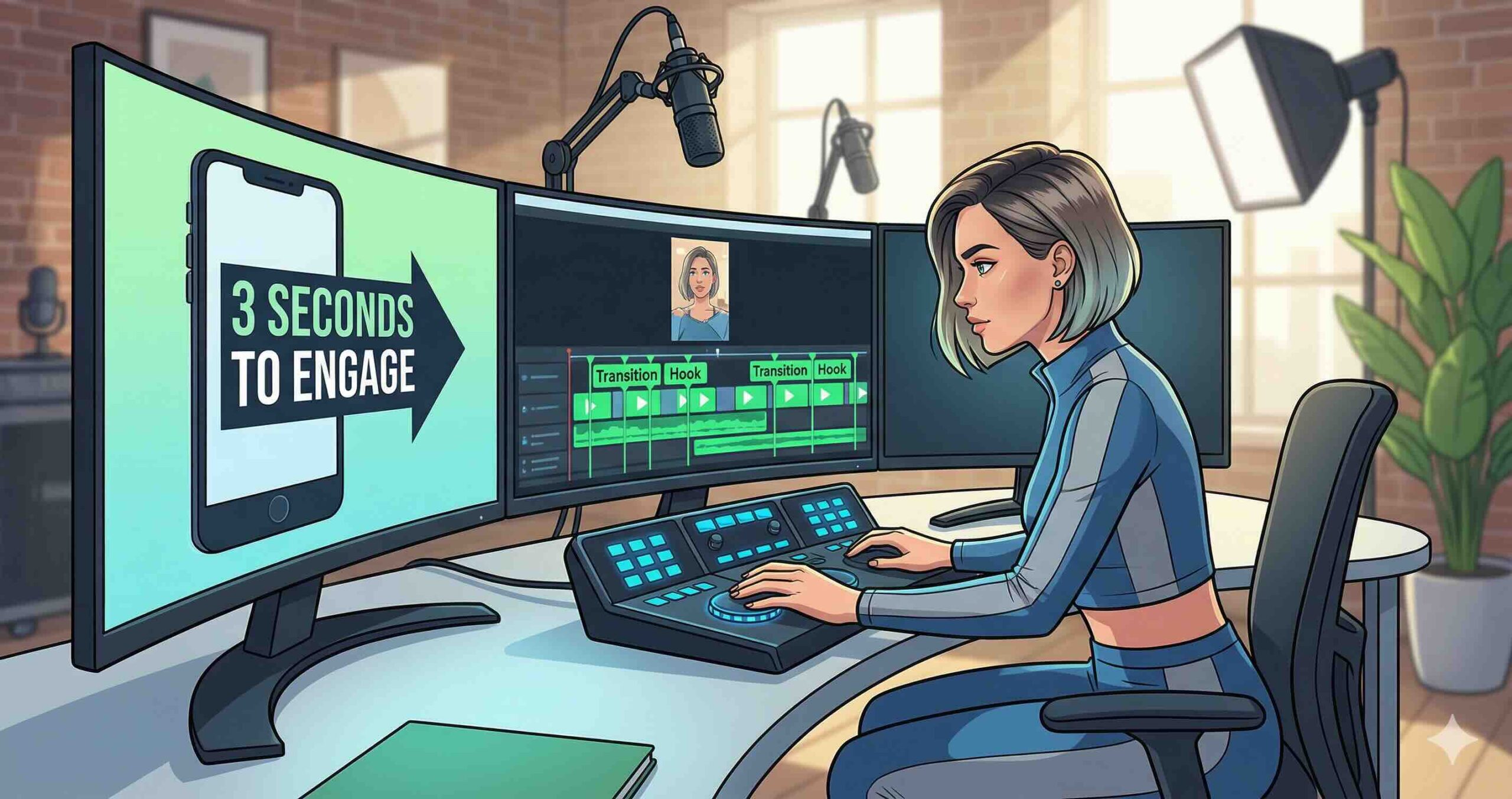
Capturing attention in the first three seconds is the only way to stop the scroll on modern social platforms. This guide explains how to use transitional hook clips to keep viewers watching longer and improve your video completion rates. You will learn what these hooks are, why they work for the algorithm, and how to implement them today.
Key Summary
- Transitional hooks for social media videos create curiosity and visual variety.
- Using transitional hook clips prevents viewers from scrolling past your content.
- Video completion rates can increase by 30 percent when using high-quality transitions.
- Strategic editing is more important than expensive equipment for going viral.
Understanding Transitional Hooks for Social Media Videos
A transitional hook is a visual or auditory shift used at the start or during a video to maintain momentum. Unlike a standard introduction, these hooks use movement or sudden changes to trigger a psychological response in the viewer. They act as a bridge between the initial curiosity and the core message of your content. Most creators fail because their videos are static. Adding a movement-based hook tells the viewer that something interesting is happening right now. And that is why it matters for your reach.
These techniques are essential because the human brain is wired to notice change. When a video stays on one frame for too long, the viewer loses interest. Data shows that 65 percent of viewers who watch the first three seconds of a video will stay for at least ten seconds. Using transitional hook clips helps you secure that initial three-second window. It is about keeping the energy high without being annoying or fake.
Why Your Content Needs Transitional Hook Clips
The algorithm prioritizes watch time above almost everything else. If people drop off after two seconds, your video will not be shown to a wider audience. In 2024, short-form video consumption increased by another 20 percent across major platforms. This means competition is higher than ever. You are not just competing with other creators; you are competing with every other distraction on a user’s phone.
Transitional hook clips solve the problem of stagnant pacing. They provide a “pattern interrupt” that resets the viewer’s attention span. This is a common strategy used in professional video production to ensure the audience never gets bored. If you want to grow your brand, you have to treat your social media presence like a professional broadcast. Clear transitions make your content look more polished and authoritative.
How to Implement Hooks for Better Results
Start by identifying the most important part of your message. Your hook should lead directly into that value. For example, if you are sharing a tutorial, use a fast-paced clip showing the end result before jumping into the steps. This gives the viewer a reason to stay. Do not overcomplicate the process. You can use simple movements like a camera swish, a digital zoom, or a physical object moving across the frame.
Consistency is more important than perfection. You should test different types of hooks to see what your specific audience responds to. Some creators find success with text-based overlays, while others prefer raw, handheld movement. If you need help staying consistent, a social media management team can help you plan and execute these strategies effectively. The goal is to make the transition feel like a natural part of the story you are telling.
Common Mistakes to Avoid with Video Transitions
The biggest mistake is making the transition too long. A hook should be fast. If it takes three seconds just to get through the transition, you have already lost the viewer. Keep your transitions under 0.5 seconds. Another mistake is using transitions that do not match the mood of the video. A high-energy jump cut works for a fitness video but might feel jarring for a serious business tip. Match the energy of the hook to the energy of the content.
You should also avoid using too many effects. If every five seconds there is a flashing light or a spinning camera, the viewer will get a headache and leave. Use these tools strategically to emphasize a point or move to a new topic. If you find your organic reach is still low despite good editing, it might be time to look into SEO services to ensure your captions and metadata are working as hard as your visuals.
Analyzing Your Video Performance Data
Numbers do not lie. Check your retention graphs in your platform analytics. If you see a sharp drop at the very beginning, your hook is the problem. If you see drops during the middle of the video, you need better transitional hook clips between your main points. Most successful creators aim for a 50 percent retention rate at the halfway mark of their videos. To reach these numbers, you need a data-driven approach to your creative work.
Working with an expert team like Torro Media can help you identify these gaps in your strategy. Whether it is through better editing or a more robust marketing services plan, the focus should always be on quality over quantity. Small adjustments to your hooks can lead to massive gains in followers and engagement. But you have to be willing to look at the data and change what is not working.
If you want to improve your content strategy today, you can request a quote to see how we can help. For more general inquiries about our process, feel free to contact us anytime.
Frequently Asked Questions
What are transitional hooks for social media videos?
Transitional hooks for social media videos are specific editing techniques or physical movements used to grab attention and move a viewer smoothly from one idea to the next. These hooks prevent the viewer from losing interest by providing constant visual stimulation and a clear narrative flow.
How do transitional hook clips improve video reach?
Transitional hook clips improve reach by increasing the average watch time of a video. Since social media algorithms promote content that keeps users on the platform longer, using effective hooks leads to more impressions and a higher chance of the video going viral.
Are transitional hooks better than traditional introductions?
Yes, transitional hooks are generally more effective than traditional introductions in short-form video. A traditional introduction often takes too long to get to the point, whereas a hook provides immediate value or curiosity, which is necessary for the fast-paced nature of social media scrolling.
Do I need expensive software to create video hooks?
No, you do not need expensive software. Most modern mobile editing apps have built-in features that allow you to create professional-looking transitional hooks. The effectiveness of the hook depends more on the timing and the concept than the price of the software used to create it.
Hooked on Content?
Our blog is packed with expert tips, trending techniques, and insider secrets to help you master transitional hooks and keep your audience watching.